Becoming a Chartered Accountant (CA) opens doors to careers in audit, taxation, finance and consulting, but the ICAI exams are demanding. Most students who struggle don’t lack intelligence; they lack a plan. This guide explains how to prepare for the CA exam at every level (Foundation, Intermediate and Final) with a step-by-step study plan, revision strategy and the mistakes to avoid.
Quick Answer: How to Prepare for the CA Exam
- Understand the latest ICAI scheme, syllabus and exam pattern before you start.
- Break the syllabus into weekly targets and follow a fixed daily schedule.
- Study from ICAI material first, then add coaching notes or video lectures if needed.
- Revise every subject at least two to three times before the exam.
- Solve RTPs, MTPs, past papers and full-length mocks under timed conditions.
- Analyse every mock test and work on weak chapters immediately.
Understand the CA Exam Structure First
The CA course has three levels: CA Foundation, CA Intermediate and CA Final, along with practical training (articleship). Under ICAI’s new scheme, the levels look like this:
| Level | Papers | Key points |
|---|---|---|
| CA Foundation | 4 papers | Papers 3 and 4 are objective (MCQ) and carry negative marking of 0.25 per wrong answer |
| CA Intermediate | 6 papers in 2 groups | Mix of case-based MCQs and descriptive questions; no negative marking |
| CA Final | 6 papers in 2 groups | Mix of case-based MCQs and descriptive questions; no negative marking |
To clear a level you generally need at least 40% in each paper and 50% in aggregate. Under the new scheme, scoring 60% or more in a paper can earn an exemption in later attempts. New to the course? Read our guide on how to become a CA in India and the step-by-step CA Foundation registration process first.
Create a Realistic CA Study Plan
Go Through the Syllabus and Set Weekly Goals
Download the latest syllabus from ICAI and list every chapter for every subject. Mark chapters you find hard, then divide the syllabus into weekly targets with a deadline for each. Give more weeks to heavy, application-based subjects such as Taxation, Auditing and Financial Reporting.
Build a Daily Schedule and Manage Your Time
Fix study hours for each subject, alternate numerical and theory subjects, and plan short breaks (for example, a focused block followed by a 10-minute rest) to avoid burnout. If you are doing articleship, plan fixed study slots around office hours and use weekends for revision and mocks. For more tactics, see our post on time management strategies for CA exam preparation.
Sample 6-Month Plan and 90-Day Plan
| Phase | 6-month plan | 90-day plan |
|---|---|---|
| Learn the syllabus | Months 1-3: first full pass of all subjects | Days 1-40: first pass, prioritising high-weightage chapters |
| Practice | Month 4: chapter-wise questions and past papers | Days 41-60: questions, RTPs and MTPs |
| Revision | Month 5: first full revision from short notes | Days 61-80: revision from short notes |
| Mock and final revision | Month 6: timed mocks, weak-area revision, final revision | Days 81-90: timed mocks and quick revision only |
A 90-day plan works only if you already have a decent grip on the syllabus. For first-time candidates, starting at least six months ahead is safer.
Choose the Right Study Material
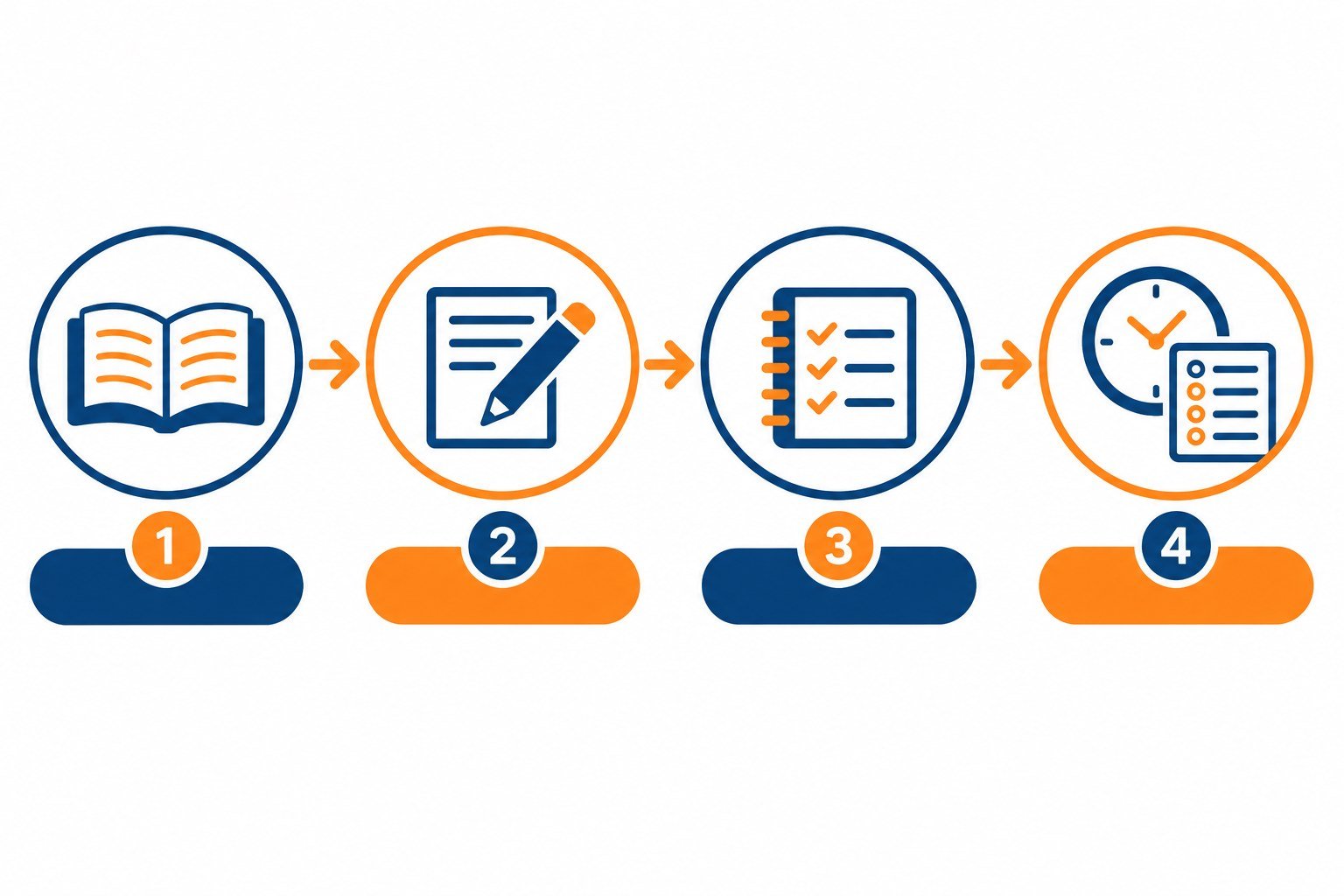
- ICAI study material: the most exam-oriented source; read it first and keep it as your base.
- RTPs, MTPs and Suggested Answers: practise from the last few attempts. For Taxation, use only papers that match the Finance Act applicable to your exam.
- Video lectures and online resources: use them to understand difficult topics, not to replace ICAI material.
- Short notes and flashcards: make your own notes so you can revise a subject quickly.
Study Techniques That Work
- Focus on concepts: the exam tests application, so memorised answers rarely help.
- Active recall: close the book and write what you remember, using flashcards, mnemonics, mind maps and flowcharts.
- Write answers: practise the answer-writing format for theory and case-based questions.
- Practise daily: a little numerical and theory practice every day builds speed and accuracy.
- Time yourself: solve papers within the three-hour limit.
Looking for level-specific advice? See how to prepare for CA Intermediate exams and tips for acing CA exams.
Revision Strategy for the CA Exam
Plan to revise each subject at least two to three times. Revise from your short notes, re-solve questions you got wrong, and keep the last two to three weeks for mock tests and quick revision only. Avoid learning brand-new topics right before the exam.
Mock Tests and Test Analysis
Attempt full-length mocks in exam conditions, then spend as much time analysing them as writing them. Note whether each lost mark came from a concept gap, a calculation error, poor time management or a presentation issue, and fix the pattern before the next mock.
Balancing Articleship and Exam Preparation
Managing articleship alongside studies is one of the biggest challenges for CA students. Fix short daily study slots, use commute time for revision of notes or flashcards, protect weekends for mocks, and use study leave wisely for full revision. If you feel overwhelmed, our guide on overcoming common CA exam challenges can help.
Common Mistakes to Avoid
- Starting late and relying on last-minute cramming.
- Skipping theory subjects because they seem easy.
- Studying from outdated material or ignoring latest amendments and syllabus changes.
- Solving papers without a timer.
- Taking mocks but never analysing them.
- Comparing your pace with others instead of following your own plan.
Coaching vs Self-Study for the CA Exam
Self-study can work if you are disciplined, but coaching gives structure, expert guidance, doubt-clearing and regular tests. When choosing an institute, compare faculty expertise, study material, test series, batch size and student reviews. If you are in South Delhi, Delhi or Gurgaon, Straight Shot CA offers classes for CA Foundation and CA Intermediate, including online options.
Frequently Asked Questions
How many hours should I study for the CA exam?
It depends on the level and your background, but consistency matters more than marathon days. Set a realistic daily target you can maintain, and increase it as the exam approaches.
Can I clear the CA exam without coaching?
Yes, some students do it through disciplined self-study with ICAI material, RTPs, MTPs and mock tests. Coaching mainly helps with structure, doubt-clearing and accountability.
How many times should I revise before the exam?
Aim for at least two to three revisions of every subject, using short notes and past-paper questions.
Is there negative marking in the CA exam?
Under the new scheme, negative marking applies to the objective papers (Papers 3 and 4) of CA Foundation, not to CA Intermediate or CA Final. Confirm current rules on the ICAI website.
When should I start preparing?
Ideally at least six months before your first attempt. Have more questions? Read The CA Exam: Frequently Asked Questions.
Final Thoughts
Preparing for the CA exam comes down to a clear plan, the right material, repeated revision and honest mock-test analysis. Start with the syllabus, stay consistent, and adjust your plan as you learn what works for you.
Watch free tips on our YouTube channel: Straight Shot CA